Our Blogs & Articles

Discover articles, guides, and structured resources designed to help students, educators, and lifelong learners thrive in their educational journey.

How E-Learning Platforms Support the Digital Transformation of Educational Institutes? E-Learning
How E-Learning Platforms Support the Digital Transformation of Ed...

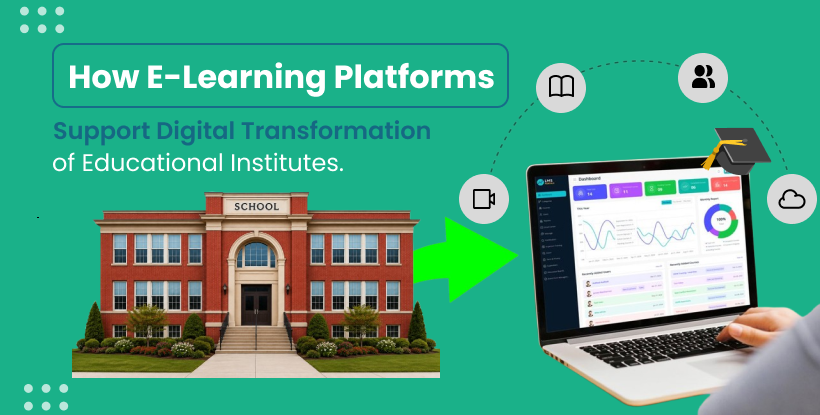
Digital tools aren't a nice to have anymore for schools, colleges, and training centers they're becoming essential. Institutes still stuck with paper registers and manual grading are losing ground to ones offering quicker, more flexible learning options. The force behind this change is the e-learning platform.What Is Digital Transformation for Educational Institutes?At its core, it's about restructuring how an institute functions going beyond just having a website, and actually moving teaching, administrative work, and student engagement onto digital tools. That includes admissions, attendance, content delivery, assessments, and communication.Most of this shift runs through a Learning Management System (LMS).Why E-Learning Platforms Matter Here?- Pull content, attendance, grading, and communication into a single system- Help institutes reach learners outside their physical campus- Convert raw attendance and performance data into insights that can actually be acted on- Reduce the repetitive admin load on staff and teachers- Meet what today's learners expect — mobile access, fast feedback, digital recordsKey Ways These Platforms Drive Transformation1. One Place for ContentRather than scattered handouts, course materials sit in a single searchable system that teachers and students can pull up anytime.2. Less Manual Admin WorkAttendance, grading, fee reminders, and reporting shift from manual effort to automated processes — freeing up staff time.3. Decisions Backed by DataDashboards flag where students are falling behind and which courses need attention — the kind of visibility that's hard to get by hand.4. Reach That Isn't Tied to a BuildingHybrid or fully online programs let an institute teach learners in other cities or countries without opening a new physical location.5. Smoother CommunicationMessaging and parent/guardian portals replace the back-and-forth of phone calls and printed notices.6. Assessment That ScalesAuto-graded quizzes and plagiarism checks make it possible to evaluate large groups of students both quickly and consistently.Roadblocks Institutes Commonly Run Into- Staff pushback against adopting new tools- The work involved in migrating existing content and records over- Budget hesitation — even though cloud-based LMS is typically cheaper than building custom infrastructure- Ending up with a generic platform that doesn't actually match how the institute operatesWhat to Look for When Choosing a Platform?1. A platform designed for institutes specifically, not repurposed corporate training software2. Ease of use for teachers and students, over a long list of features3. Solid reporting and analytics, not just a place to host content4. Reliable mobile access5. Room to scale multi-branch support and custom features as the institute growsMantra LMS is built around exactly this need one system covering content, attendance, assessments, and communication, shaped specifically for how Nepali institutes operate.

Sep 04, 2026
10
How to Choose the Right E-Learning Platform for Your Educational Institute? E-Learning
How to Choose the Right E-Learning Platform for Your Educational...

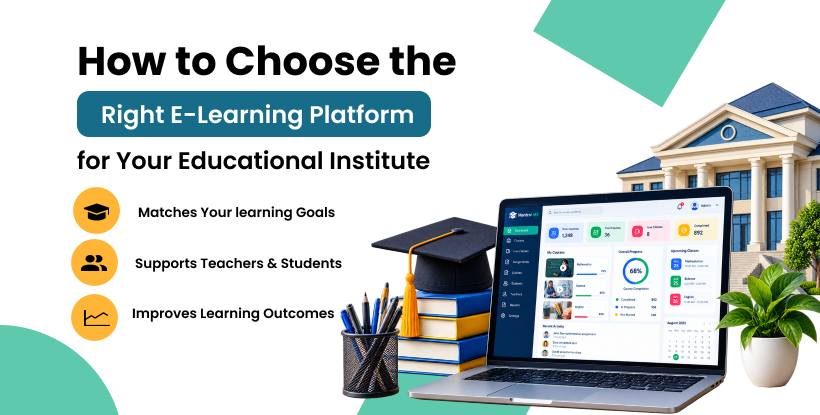
Choosing the right e-learning platform for your educational institute can improve how teachers teach, students learn, and administrators manage online education. The platform should match your institute's learning goals, student needs, budget, and future growth.1. Identify Your Institute's Learning RequirementsFirst, understand what your institute needs from an LMS for educational institutions, such as online courses, live classes, assessments, and student management.2. Evaluate Course and Content ManagementChoose an e-learning platform that makes it easy for teachers to create courses, upload learning materials, and organize lessons.3. Check Assessment and Online Examination FeaturesLook for LMS assessment tools that support quizzes, exams, assignments, mock tests, grading, and results.4. Look for Student Progress TrackingA good learning management system should help teachers monitor course completion, test results, assignments, and overall student progress.5. Consider Learning Analytics and ReportingLearning analytics and reports help institutes understand student performance, engagement, and learning progress.6. Choose an Easy-to-Use LMSA user-friendly LMS should offer simple navigation and clear dashboards so teachers, students, and administrators can use it easily.7. Make Sure It Works Well on Mobile DevicesChoose a mobile-friendly e-learning platform that allows students to access lessons, quizzes, assignments, and results from smartphones and tablets.8. Check Scalability for Future GrowthA scalable LMS should support more students, courses, instructors, and departments as your educational institute grows.9. Prioritize Security and Data ProtectionCheck LMS security features such as secure login, access control, data protection, backups, and secure hosting to protect student information.10. Check Integration CapabilitiesChoose an LMS that supports LMS integration with tools such as video conferencing platforms, payment gateways, email systems, and other educational software.11. Compare Pricing and Overall ValueWhen comparing e-learning platform costs, consider setup, customization, hosting, maintenance, integrations, and support not just the subscription price.12. Evaluate Customer SupportA reliable LMS provider should offer technical support, training, regular updates, and troubleshooting assistance when needed.E-Learning Platform vs. Traditional WebsiteA traditional educational website mainly provides information such as courses, notices, faculty details, and contact information. An e-learning platform goes further by supporting online courses, assessments, student accounts, progress tracking, and learning analytics.E-Learning Platform Selection ChecklistBefore choosing an LMS for your educational institute, consider:* Course and content management* Assessment and examination tools* Student progress tracking* Learning analytics* Ease of use* Mobile accessibility* Scalability* Security* Integrations* Pricing* Customer supportConclusionChoosing the right e-learning platform for your educational institute requires more than comparing features. Consider your institute's learning goals, student needs, usability, security, scalability, integrations, and budget. By evaluating these factors carefully, you can select an LMS that supports effective online learning and your institute's future growth.
Sep 01, 2026
22
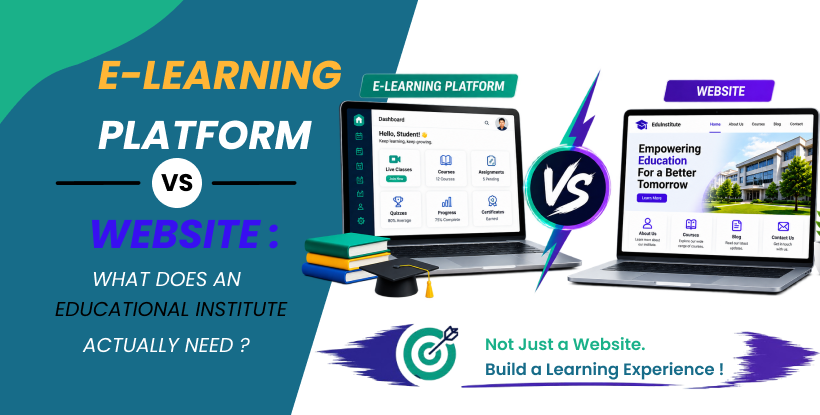
E-Learning Platform vs Website: What Does an Educational Institute Actually Need? E-Learning
E-Learning Platform vs Website: What Does an Educational Institut...

How Personalized Learning Paths Enhance Student Engagement in Online Education?Personalized learning paths are changing the way students experience online education by making learning more flexible and learner-focused. Instead of giving every student the same content and learning sequence, personalized learning paths adapt lessons, activities, and assessments according to individual needs, goals, skill levels, progress, and learning pace. This approach can make the online learning experience more relevant and meaningful, helping students stay motivated, participate actively, and continue progressing toward their learning goalsWhat Are Personalized Learning Paths?Personalized learning paths are customized learning journeys that provide students with lessons, activities, and assessments based on their individual learning needs, progress, and goals.1. Provide Relevant Learning ContentPersonalized learning helps students access content that matches their current knowledge and learning goals, making the online learning experience more useful and engaging.2. Support Different Learning SpeedsEvery student learns differently. Personalized learning paths allow learners to progress at their own pace, making online education more comfortable and flexible.3. Give Clear Learning DirectionA learning path in an LMS shows students what they have completed and what they need to learn next. This clear structure helps learners stay focused on their goals.4. Identify Learning GapsAssessments and learning analytics can identify areas where students need improvement. An LMS can then provide additional lessons, practice, or resources to support their learning.5. Encourage Active LearningQuizzes, assignments, practice tests, and interactive activities encourage students to participate actively. This can improve student engagement in online learning.6. Track Student ProgressProgress tracking allows learners to see completed lessons, assessment results, and achievements. Seeing their progress can motivate students to continue learning.Example of Personalized LearningStudents with different skill levels can follow different personalized learning paths within the same course. Beginners may receive foundational lessons, while advanced learners can move to more challenging content.How Can an LMS Support Personalized Learning Paths?A Learning Management System (LMS) can support personalized learning through learning paths, assessments, progress tracking, learning analytics, automated recommendations, and performance reports.Personalized Learning vs. One-Size-Fits-All LearningTraditional online education usually provides the same content and pace for everyone. Personalized learning adapts the learning journey according to individual student needs, abilities, and progress.Why Does Personalized Learning Matter?Personalized learning paths make students' learning experiences more relevant and goal-oriented. When learners receive suitable content and clear direction, they are more likely to stay motivated and engaged.ConclusionPersonalized learning paths improve student engagement in online education by providing relevant content, flexible learning speeds, clear goals, targeted support, and visible progress. With the right LMS software, institutions can create personalized and engaging learning experiences that help students learn more effectively.

Aug 31, 2026
28
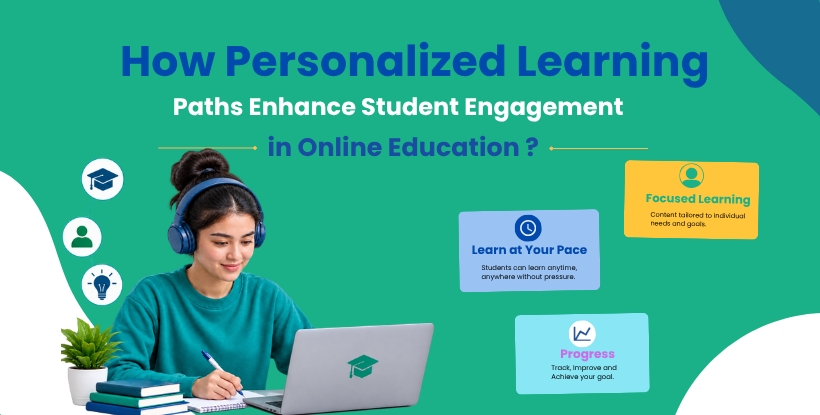
How Personalized Learning Paths Enhance Student Engagement in Online Education? E-Learning
How Personalized Learning Paths Enhance Student Engagement in Onl...

Personalized learning paths are changing the way students experience online education by making learning more flexible and learner-focused. Instead of giving every student the same content and learning sequence, personalized learning paths adapt lessons, activities, and assessments according to individual needs, goals, skill levels, progress, and learning pace. This approach can make the online learning experience more relevant and meaningful, helping students stay motivated, participate actively, and continue progressing toward their learning goalsWhat Are Personalized Learning Paths?Personalized learning paths are customized learning journeys that provide students with lessons, activities, and assessments based on their individual learning needs, progress, and goals.1. Provide Relevant Learning ContentPersonalized learning helps students access content that matches their current knowledge and learning goals, making the online learning experience more useful and engaging.2. Support Different Learning SpeedsEvery student learns differently. Personalized learning paths allow learners to progress at their own pace, making online education more comfortable and flexible.3. Give Clear Learning DirectionA learning path in an LMS shows students what they have completed and what they need to learn next. This clear structure helps learners stay focused on their goals.4. Identify Learning GapsAssessments and learning analytics can identify areas where students need improvement. An LMS can then provide additional lessons, practice, or resources to support their learning.5. Encourage Active LearningQuizzes, assignments, practice tests, and interactive activities encourage students to participate actively. This can improve student engagement in online learning.6. Track Student ProgressProgress tracking allows learners to see completed lessons, assessment results, and achievements. Seeing their progress can motivate students to continue learning.Example of Personalized LearningStudents with different skill levels can follow different personalized learning paths within the same course. Beginners may receive foundational lessons, while advanced learners can move to more challenging content.How Can an LMS Support Personalized Learning Paths?A Learning Management System (LMS) can support personalized learning through learning paths, assessments, progress tracking, learning analytics, automated recommendations, and performance reports.Personalized Learning vs. One-Size-Fits-All LearningTraditional online education usually provides the same content and pace for everyone. Personalized learning adapts the learning journey according to individual student needs, abilities, and progress.Why Does Personalized Learning Matter?Personalized learning paths make students' learning experiences more relevant and goal-oriented. When learners receive suitable content and clear direction, they are more likely to stay motivated and engaged.ConclusionPersonalized learning paths improve student engagement in online education by providing relevant content, flexible learning speeds, clear goals, targeted support, and visible progress. With the right LMS software, institutions can create personalized and engaging learning experiences that help students learn more effectively.

Aug 30, 2026
34
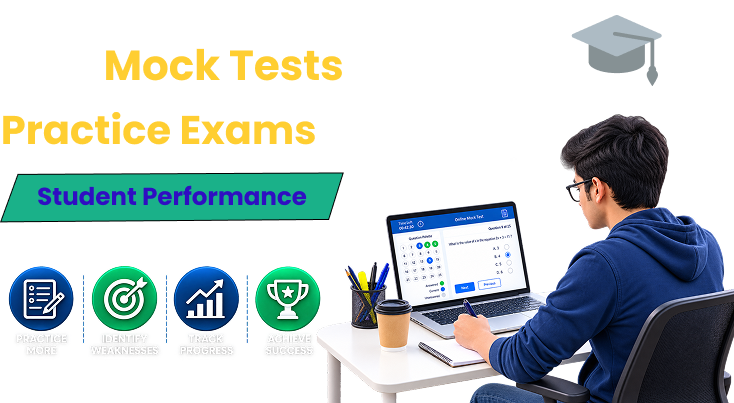
How Mock Tests and Practice Exams Improve Student Performance? E-Learning
How Mock Tests and Practice Exams Improve Student Performance?

Mock tests and practice exams are valuable tools for improving student performance and preparing for real examinations.They provide students with exam-like practice, help them understand the test structure, identify areas that need improvement, manage their time, remember important concepts, reduce exam stress, learn from mistakes, and build confidence.What Are Mock Tests and Practice Exams?A mock test is a practice examination designed to closely resemble the actual exam. It may include similar question types, difficulty levels, time limits, and exam patterns. Practice exams allow students to apply their knowledge, check their understanding, and assess their preparation before the real examination.1. Familiarizes Students With the Exam PatternMock tests help students become familiar with the exam format, question types, difficulty level, and time limits. Regular practice reduces uncertainty and helps learners understand what they can expect during the actual examination.2. Identifies Areas for ImprovementPractice exams help students recognize which topics they understand and which ones require additional study. By reviewing wrong answers and analyzing their performance, students can identify knowledge gaps and difficult areas and focus more attention on them.3. Strengthens Knowledge and MemorySolving practice questions encourages students to recall and apply what they have learned. Unlike simply reading study materials, active practice reinforces important concepts and supports better knowledge retention and understanding.4. Improves Time ManagementManaging time effectively is essential during an examination. Mock tests allow students to practice within a fixed time limit. They learn how to prioritize questions, distribute their time effectively, and avoid spending too much time on challenging questions.5. Helps Reduce Exam AnxietyExaminations can create stress and nervousness among students. Regular practice makes exam conditions more familiar. By experiencing timed questions and exam-style tasks repeatedly, students can become more comfortable and feel better prepared for the actual test.6. Builds ConfidenceConsistent practice allows students to see their progress over time. As they improve their scores and become more comfortable answering questions, they can develop greater confidence. This helps them approach the actual exam with a calm, positive, and focused mindset.7. Helps Students Learn From MistakesMock tests give students a chance to learn from incorrect answers. Reviewing mistakes helps them understand what went wrong, revisit difficult concepts, and correct their weaknesses. This can reduce the likelihood of making similar mistakes in the actual examination.8. Improves Speed and AccuracyRegular practice can help students answer questions more quickly and accurately. Familiarity with different question styles makes it easier to understand questions and solve them efficiently, allowing students to make better use of their limited exam time.9. Helps Track Learning ProgressMock test results provide a useful way to monitor student progress. Comparing scores from different practice exams can show whether performance is improving and which topics still require attention. Teachers and LMS platforms can also use these results to provide personalized feedback and targeted learning activities.10. Provides Realistic Exam PreparationMock tests recreate important parts of the real examination experience. Students can practice answering questions, managing time, reviewing mistakes, handling pressure, and evaluating their performance before taking the actual test.ConclusionMock tests and practice exams make exam preparation more organized, practical, and effective. They help students identify learning gaps, strengthen memory, improve time management, manage exam anxiety, increase speed and accuracy, and develop confidence.For students preparing for JLPT, IELTS, PTE, and other academic or competitive examinations, regular practice tests can help measure their readiness and identify areas that need further improvement. When students combine mock tests with performance analysis, revision, and targeted practice, they can use practice exams as an effective strategy to improve their overall examination performance.

Aug 26, 2026
44
The Global Classroom Has No Time Zone: Rethinking How the World Learns Together E-Learning
The Global Classroom Has No Time Zone: Rethinking How the World L...

Education used to mean everyone showing up to the same room, at the same hour. That assumption is breaking down. Today's learners are spread across continents, working night shifts, or living twelve hours ahead of their instructor and the platforms built for a single time zone are starting to show their cracks.What Does "The Global Classroom Has No Time Zone" Mean?It means modern online education can no longer be designed around one region's working hours. A learner in Kathmandu, an instructor in London, and a cohort in Toronto are technically in the "same classroom" — but never at the same clock time. The global classroom isn't a place anymore. It's a shared learning space that exists outside any single time zone.This shift is forcing LMS platforms, course designers, and institutions to rethink core assumptions:Live sessions can't be the only way to deliver value"On-time" participation needs a new definitionCollaboration has to work without everyone being online togetherWhy Time Zones Are Becoming an LMS Design Problem?For years, e-learning platforms borrowed the logic of physical classrooms a fixed schedule, a live instructor, a synchronized start time. That model works when learners share a city. It breaks down at global scale.The Synchronous TrapLive classes still dominate corporate and academic LMS platforms, but they quietly exclude anyone outside a convenient time window. A 9 AM session in Nepal is a 3 AM session in New York. Attendance requirements built for one region penalize learners everywhere else.The Cost of "Catching Up"When live sessions are mandatory, learners in distant time zones are pushed into a permanent catch-up mode — watching recordings instead of participating, missing live Q&A, and falling behind on discussion threads that moved on hours before they logged in.How Global Institutes Are Solving It?Forward-looking institutes and LMS providers are shifting design priorities away from "when" learning happens and toward "how" it happens.1. Asynchronous-First Course DesignInstead of treating recordings as a backup, some platforms now build courses to work fully without a live session — structured modules, embedded quizzes, and discussion boards that don't require real-time presence.2. Rolling Cohorts Instead of Fixed Start DatesRather than one global start time, learners join a rolling cohort and progress on their own timeline, while still being grouped with peers for feedback and discussion.3. Asynchronous Discussion as the New "Live Class"Well-structured forums, threaded Q&A, and instructor response windows are replacing real-time chat as the primary space for interaction — because they work for every time zone equally.4. Follow-the-Sun Instructor SupportSome institutions stagger instructor and support-staff availability across time zones, so a learner is never more than a few hours from a real response, no matter when they log in.What This Means for Learners?No more choosing between sleep and attendanceEqual access regardless of geographyLearning fits around work, family, and local routines — not the other way aroundPeer collaboration becomes asynchronous but still meaningful, through structured discussion rather than live chatWhat This Means for Institutes and InstructorsCourse content needs to be more self-explanatory, since a live instructor won't always be there to clarifyAssessment design has to account for learners working independently, not in a shared roomEngagement metrics need to shift from "attendance" to "completion" and "interaction quality"Platforms need built-in flexibility: downloadable content, offline access, and asynchronous feedback loops

Aug 19, 2026
65
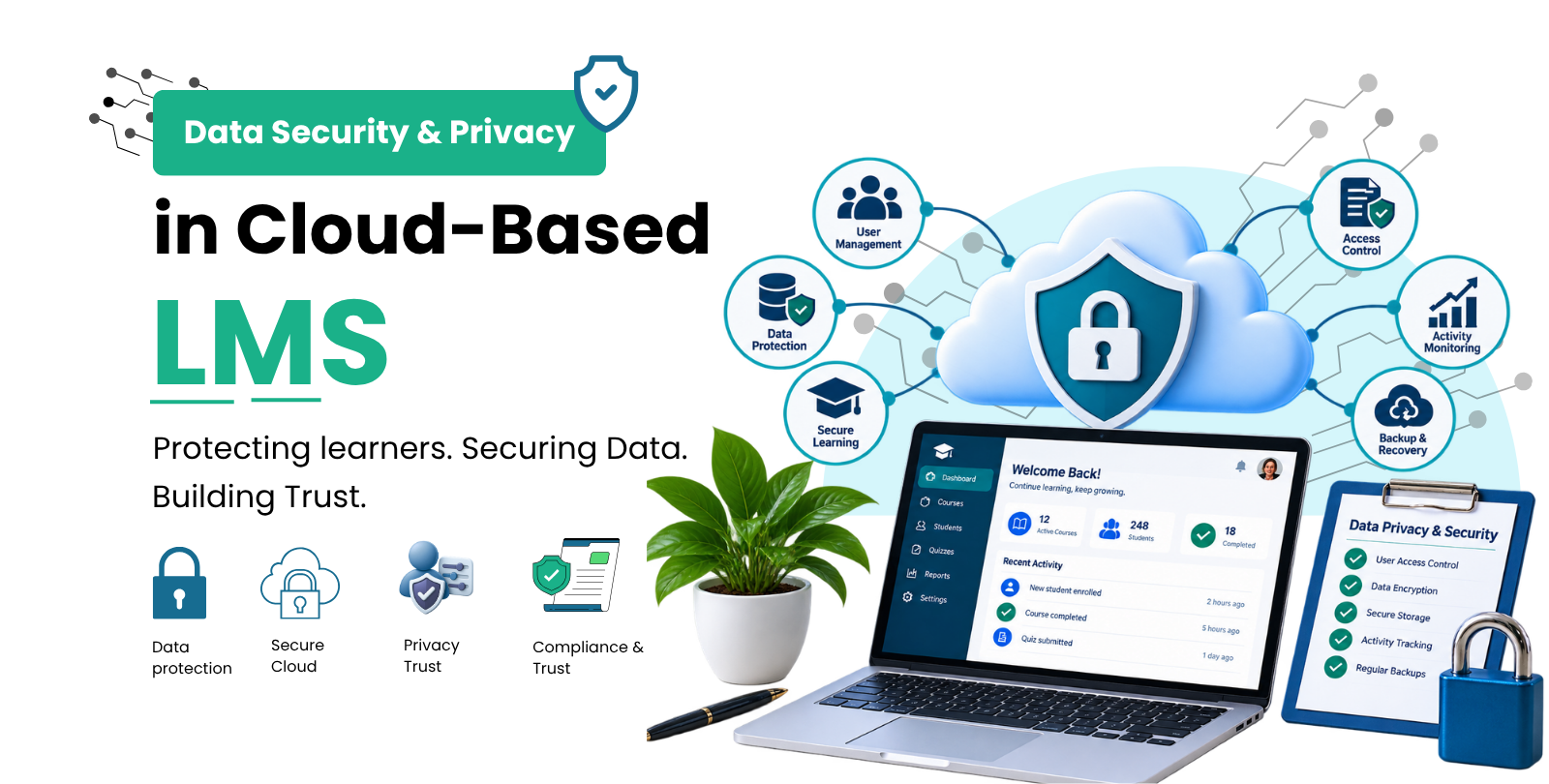
Data Security & Privacy in Cloud-Based LMS E-Learning
Data Security & Privacy in Cloud-Based LMS

What Is Data Security and Privacy in a Cloud-Based LMS?Data security and privacy in a cloud-based Learning Management System (LMS) refer to protecting learner, instructor, and organizational data stored online. A secure cloud LMS helps prevent unauthorized access, data loss, cyberattacks, and misuse of sensitive information.Cloud LMS platforms may store user profiles, login details, course progress, assessment results, certificates, attendance, and learning analytics. Therefore, strong security and privacy measures are essential.Why Are Security and Privacy Important in a Cloud-Based LMS?Cloud LMS platforms store large amounts of learning data on remote servers. Strong security helps organizations:* Protect sensitive learner data* Prevent unauthorized access* Reduce data breach risks* Secure data during storage and transfer* Maintain reliable access to learning systems* Build trust among learners and organizationsKey Data Security Features in a Cloud-Based LMS1. Data Encryption Encryption protects data by converting it into a secure format. A reliable LMS should protect data both at rest and in transit.2. Role-Based Access ControlRole-based access ensures users can only access information and features relevant to their responsibilities.For example, administrators can manage the system, instructors can manage courses, and learners can access their assigned content.3. Strong AuthenticationStrong passwords, multi-factor authentication (MFA), and secure login systems help prevent unauthorized access to LMS accounts.4. Regular BackupsRegular backups help organizations recover important learning data after accidental deletion, system failure, or security incidents.5. Security Monitoring and Audit LogsMonitoring login activity, access attempts, and administrative changes helps identify suspicious activity and investigate security issues 6. Secure Software UpdatesRegular software and security updates help protect the LMS from known vulnerabilities and emerging security threats.Privacy Protection in a Cloud-Based LMSData security protects information from unauthorized access, while **data privacy focuses on how personal information is collected, used, stored, shared, and deleted**.A privacy-focused LMS should clearly explain:* What data is collected* Why the data is collected* Who can access it* How long it is stored* Whether it is shared with third parties* How data can be deleted when appropriateCloud LMS Compliance and Data ProtectionPrivacy requirements can vary depending on the organization, location, and type of learner data involved. Organizations should check whether their LMS provider follows relevant privacy, security, and contractual requirements.Important areas include data retention, user consent, third-party integrations, access controls, and breach response.How to Choose a Secure Cloud-Based LMS?Before selecting a cloud LMS, organizations should check its security and privacy capabilities.Key questions include:* Is data encrypted?* Does the LMS support MFA?* Are role-based permissions available?* Are regular backups maintained?* Does the provider monitor security activity?* Where is the data stored?* How is data retained and deleted?* How are security incidents handled?* Does the provider have relevant security or compliance certifications?Best Practices for Cloud LMS Data SecurityOrganizations can improve LMS security by:1. Using strong passwords and MFA.2. Giving users only the permissions they need.3. Regularly reviewing user access.4. Keeping software and integrations updated.5. Monitoring suspicious account activity.6. Maintaining secure backups.7. Collecting only necessary personal information.8. Reviewing third-party integrations.9. Following a clear data retention policy.10. Training users about basic security practices.ConclusionData security and privacy are essential for any cloud-based LMS. Features such as encryption, access control, authentication, backups, monitoring, and secure updates help protect learner and organizational data.Organizations should evaluate an LMS provider's security and privacy practices carefully to ensure their learning data remains protected while supporting a reliable and trusted online learning environment.

Aug 18, 2026
67
AI Tutor vs Traditional Teaching: How LMS Platforms Are Combining Both? E-Learning
AI Tutor vs Traditional Teaching: How LMS Platforms Are Combining...

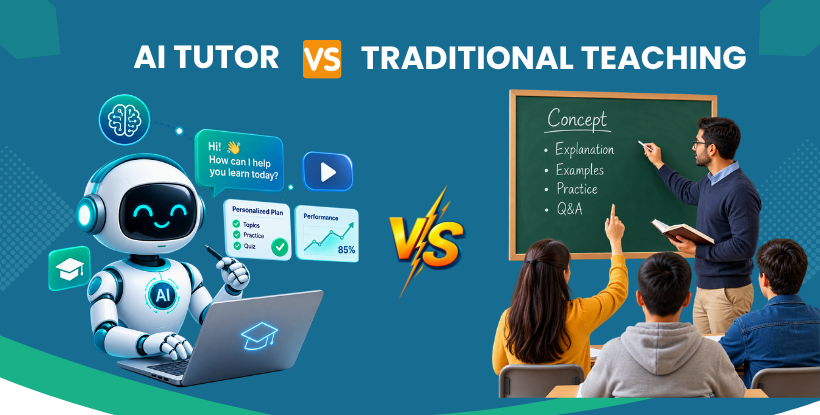
AI tutors and traditional teachers have different strengths, but modern LMS platforms can combine both to create personalized and effective learning. AI tutors provide instant explanations, practice, feedback, and anytime support, while teachers provide mentorship, motivation, critical thinking, and human guidance.AI does not need to replace teachers. Instead, an LMS can use AI for repetitive tasks and learning support while teachers continue to guide students and make important educational decisions. What Is an AI Tutor?An AI tutor is an AI-powered learning assistant that helps students understand lessons, answer questions, practice topics, and receive immediate feedback.It can:* Answer questions* Explain difficult topics* Create practice questions* Provide feedback* Recommend learning resources* Identify learning gapsHowever, AI cannot fully understand a student's emotions, personal situation, or classroom experience like a teacher can.What Is Traditional Teaching?Traditional teaching focuses on direct interaction between teachers and students. Teachers explain concepts, monitor progress, provide motivation, encourage critical thinking, lead discussions, and offer personalized guidance.Teachers can also understand when students are confused, frustrated, or struggling—something AI cannot completely replicate.AI Tutor vs Traditional Teaching?AI is mainly useful for speed, personalization, instant feedback, and repetitive learning activities. Teachers are essential for human interaction, motivation, emotional support, critical thinking, and educational judgment.For example, AI can identify a topic a student struggles with and provide practice, while a teacher can understand why the student is struggling and decide how best to support them.Therefore, AI and teachers should complement each other rather than compete.How LMS Platforms Combine AI and Teaching?A modern LMS connects AI-powered learning with teacher-led education.Personalized LearningThe LMS can analyze course progress, quiz results, and learning activities to identify student needs.Quiz → LMS identifies learning gap → AI provides support → Student practices → Teacher reviews progressTeacher ControlTeachers can review AI-generated content, learning recommendations, assessments, and student progress. This keeps educators involved in important learning decisions.Automated TasksAI can assist with FAQs, quiz creation, basic explanations, practice activities, and routine feedback, allowing teachers to focus more on meaningful instruction.Learning AnalyticsLMS analytics help teachers identify students who are progressing well and those who may need additional support. Benefits:* Personalized Learning – Support based on individual needs* Instant Feedback – Faster responses to learning activities* Teacher Productivity– Less repetitive work* 24/7 Support – Learning assistance anytime* Better Monitoring – Easier progress tracking* Flexible Learning– Students can learn at their own paceChallengesAI tutors may face challenges such as incorrect information, over-reliance, data privacy concerns, limited human connection, and reduced critical thinking if students depend on AI for direct answers.Therefore, AI should be used as a support tool rather than a replacement for teachers.Future of LMSThe future of LMS platforms is based on human-AI collaboration:Students Learn → AI Supports → LMS Analyzes → Teacher Guides → AI Personalizes.AI provides personalization and instant assistance, the LMS manages learning data and progress, and teachers provide guidance, judgment, motivation, and human connection.ConclusionAI tutors and traditional teaching are not competing approaches. AI provides personalization, speed, and instant support, while teachers provide mentorship, motivation, critical thinking, and human connection. By combining both through an LMS, education can become more personalized, flexible, and effective.

Aug 16, 2026
82
Why the Future of Education Depends on Smarter Learning Platforms? E-Learning
Why the Future of Education Depends on Smarter Learning Platforms...

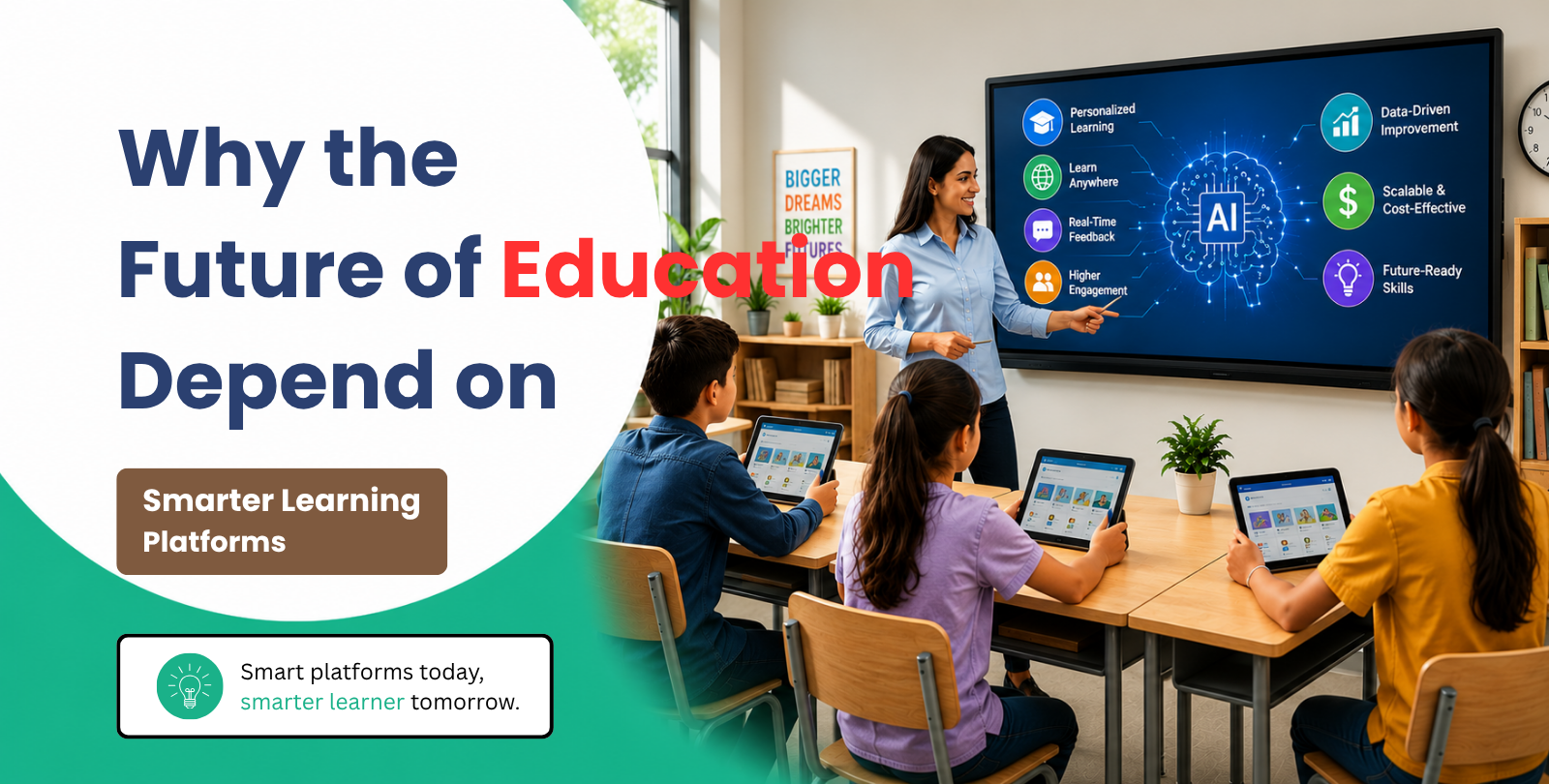
The future of education depends on smarter learning platforms because they make learning more personalized, accessible, engaging, and efficient. Traditional education often follows a one-size-fits-all approach, which may not meet the needs of every learner. Intelligent digital platforms use technologies such as artificial intelligence (AI), cloud computing, and learning analytics to adapt content, track progress, and provide better support for both students and teachers.1.Personalized LearningSmarter platforms analyze student performance and learning behavior to recommend lessons, quizzes, and resources that match individual needs. This allows students to learn at their own pace and focus on areas where they need improvement.2.Anytime, Anywhere AccessCloud-based learning platforms enable students to access courses from any device and location. This supports online, hybrid, and lifelong learning, making education more inclusive for remote learners, working professionals, and people with limited access to traditional classrooms.3.Real-Time FeedbackTeachers can monitor attendance, participation, assignments, and assessment results instantly. Identifying struggling students early makes it possible to provide timely support and improve overall learning outcomes.4. Higher EngagementInteractive videos, simulations, gamification, discussion forums, and mobile-friendly tools make learning more engaging than traditional lecture-based methods. These features increase student motivation, participation, and knowledge retention.5. Data-Driven ImprovementEducational institutions can use learning data to evaluate course effectiveness, improve teaching strategies, and refine curriculum design. This leads to continuous improvement in the quality of education.6. Scalable and Cost-EffectiveDigital courses can be delivered to thousands of learners with relatively low additional cost. As a result, smart learning platforms are valuable for schools, universities, training centers, government programs, and corporate learning initiatives.7. Preparing Learners for the FutureBeyond academic knowledge, these platforms help students develop digital literacy, self-directed learning, collaboration, communication, and problem-solving skills that are essential in a technology-driven economy.ConclusionSmarter learning platforms are becoming the foundation of modern education because they personalize learning, expand access and flexibility, provide real-time feedback, improve engagement, support data-driven decisions, reduce delivery costs, and prepare learners for the digital workforce.As education continues to evolve, intelligent learning platforms are doing more than supporting traditional teaching methods. They are helping build a more adaptive, inclusive, and future-ready learning ecosystem that can meet the changing needs of students, educators, and institutions in the digital age.

Aug 13, 2026
129