The Role of E-Learning in Bridging the Skills Gap Between Educati...
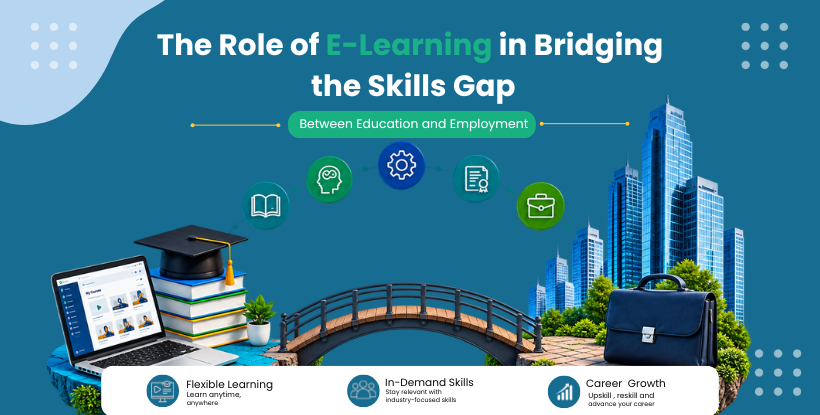
The Role of E-Learning in Bridging the Skills Gap Between Education and EmploymentE-learning helps close the gap between education and employment by giving learners flexible access to practical, relevant, and up-to-date skills. Traditional education provides foundational knowledge, while modern workplaces increasingly demand digital, technical, problem-solving, and communication skills. E-learning connects these areas through online courses, practical activities, assessments, certifications, and continuous professional development.As industries continue to adopt new technologies, the skills required for many jobs are changing. The World Economic Forum's Future of Jobs Report 2025 estimates that around 39% of workers' key skills may change by 2030 making continuous learning increasingly important.What Is the Skills Gap?The skills gap is the difference between the skills employers require and the skills learners or employees currently possess. A person may have strong academic knowledge but still need practical or technology-related skills to meet workplace expectations.The growth of AI, automation, cybersecurity, data technologies, and digital tools is creating demand for new technical skills, while employers also value creativity, communication, analytical thinking, adaptability, and collaboration.How E-Learning Helps Bridge the Gap1. Provides Job-Relevant SkillsE-learning offers targeted courses in areas such as programming, data analysis, digital tools, project management, communication, and emerging technologies.2. Supports Upskilling and ReskillingLearners can improve existing abilities or prepare for new careers without leaving their jobs or enrolling in full-time education.3. Combines Knowledge With PracticeProjects, assignments, quizzes, simulations, and case studies allow learners to apply knowledge to real-world situations.4. Offers Flexible LearningOnline learning allows students and professionals to study according to their own schedules and from different locations.5. Keeps Skills CurrentDigital courses can be updated as technologies, tools, and industry requirements change, helping learners maintain relevant skills.6. Supports Career-Focused LearningE-learning can provide training based on specific job roles and professional requirements, creating a stronger connection between learning and employment.7. Tracks Learning ProgressE-learning platforms can monitor course completion, assessments, assignments, and progress. Certificates and digital credentials can also demonstrate completed training.From Education to EmployabilityThe goal is not simply to provide more courses but to connect education with practical skills and career outcomes.Education → Skill Development → Practical Application → Assessment → Certification → Employment → Continuous LearningE-learning can support this journey by combining structured courses, practical activities, assessments, progress tracking, and certification.Why Continuous Learning Matters?Education no longer needs to end with graduation. As technology and job roles evolve, professionals need to continuously update their knowledge and skills. Upskilling and reskilling allow individuals to remain competitive and prepare for new career opportunities.E-learning makes this process more accessible by allowing people to learn while continuing their education, work, or other responsibilities.The Future of E-Learning and Employability?As workplaces become more digital, e-learning will play an increasingly important role in career development, professional training, and employability. Combining technical knowledge with skills such as creativity, critical thinking, communication, and adaptability can help learners prepare for changing workplace demands.ConclusionThe growing skills gap between education and employment creates challenges for learners, educators, and employers. E-learning can help address this gap by connecting academic knowledge with practical skills, upskilling, reskilling, assessment, certification, and career development.By providing flexible and relevant learning opportunities, e-learning helps learners move from knowledge to skills and from skills to employment, while preparing them for the changing demands of the future workplace.