Our Blogs & Articles

Discover articles, guides, and structured resources designed to help students, educators, and lifelong learners thrive in their educational journey.

Data Security & Privacy in Cloud-Based LMS E-Learning
Data Security & Privacy in Cloud-Based LMS

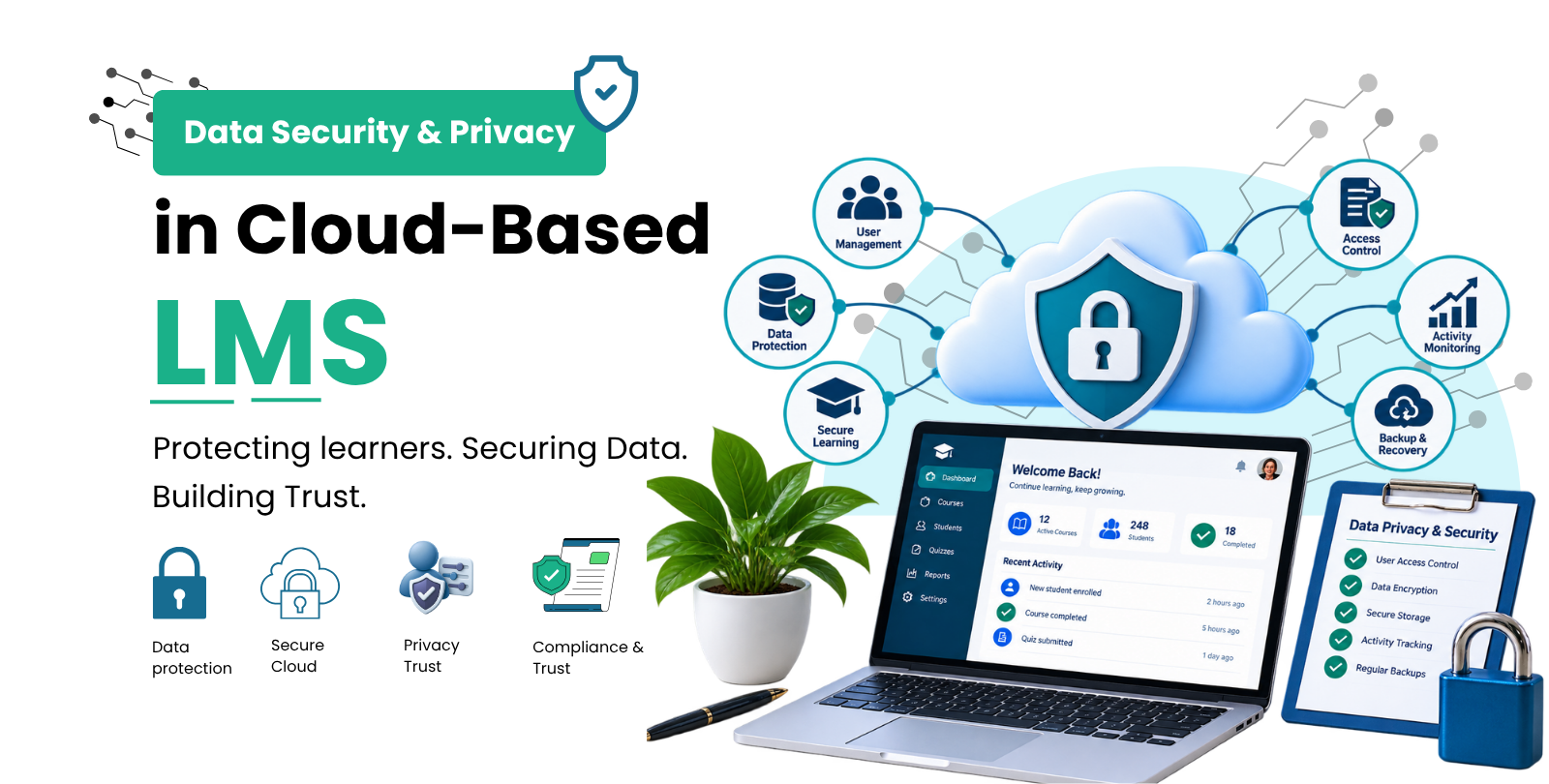
What Is Data Security and Privacy in a Cloud-Based LMS?Data security and privacy in a cloud-based Learning Management System (LMS) refer to protecting learner, instructor, and organizational data stored online. A secure cloud LMS helps prevent unauthorized access, data loss, cyberattacks, and misuse of sensitive information.Cloud LMS platforms may store user profiles, login details, course progress, assessment results, certificates, attendance, and learning analytics. Therefore, strong security and privacy measures are essential.Why Are Security and Privacy Important in a Cloud-Based LMS?Cloud LMS platforms store large amounts of learning data on remote servers. Strong security helps organizations:* Protect sensitive learner data* Prevent unauthorized access* Reduce data breach risks* Secure data during storage and transfer* Maintain reliable access to learning systems* Build trust among learners and organizationsKey Data Security Features in a Cloud-Based LMS1. Data Encryption Encryption protects data by converting it into a secure format. A reliable LMS should protect data both at rest and in transit.2. Role-Based Access ControlRole-based access ensures users can only access information and features relevant to their responsibilities.For example, administrators can manage the system, instructors can manage courses, and learners can access their assigned content.3. Strong AuthenticationStrong passwords, multi-factor authentication (MFA), and secure login systems help prevent unauthorized access to LMS accounts.4. Regular BackupsRegular backups help organizations recover important learning data after accidental deletion, system failure, or security incidents.5. Security Monitoring and Audit LogsMonitoring login activity, access attempts, and administrative changes helps identify suspicious activity and investigate security issues 6. Secure Software UpdatesRegular software and security updates help protect the LMS from known vulnerabilities and emerging security threats.Privacy Protection in a Cloud-Based LMSData security protects information from unauthorized access, while **data privacy focuses on how personal information is collected, used, stored, shared, and deleted**.A privacy-focused LMS should clearly explain:* What data is collected* Why the data is collected* Who can access it* How long it is stored* Whether it is shared with third parties* How data can be deleted when appropriateCloud LMS Compliance and Data ProtectionPrivacy requirements can vary depending on the organization, location, and type of learner data involved. Organizations should check whether their LMS provider follows relevant privacy, security, and contractual requirements.Important areas include data retention, user consent, third-party integrations, access controls, and breach response.How to Choose a Secure Cloud-Based LMS?Before selecting a cloud LMS, organizations should check its security and privacy capabilities.Key questions include:* Is data encrypted?* Does the LMS support MFA?* Are role-based permissions available?* Are regular backups maintained?* Does the provider monitor security activity?* Where is the data stored?* How is data retained and deleted?* How are security incidents handled?* Does the provider have relevant security or compliance certifications?Best Practices for Cloud LMS Data SecurityOrganizations can improve LMS security by:1. Using strong passwords and MFA.2. Giving users only the permissions they need.3. Regularly reviewing user access.4. Keeping software and integrations updated.5. Monitoring suspicious account activity.6. Maintaining secure backups.7. Collecting only necessary personal information.8. Reviewing third-party integrations.9. Following a clear data retention policy.10. Training users about basic security practices.ConclusionData security and privacy are essential for any cloud-based LMS. Features such as encryption, access control, authentication, backups, monitoring, and secure updates help protect learner and organizational data.Organizations should evaluate an LMS provider's security and privacy practices carefully to ensure their learning data remains protected while supporting a reliable and trusted online learning environment.

Aug 18, 2026
65
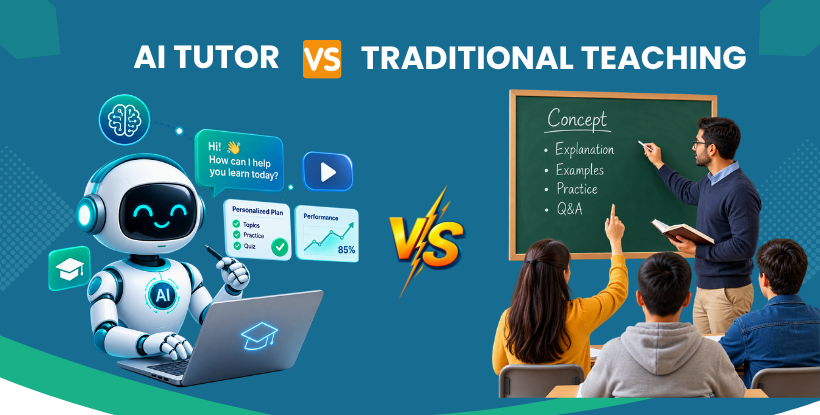
AI Tutor vs Traditional Teaching: How LMS Platforms Are Combining Both? E-Learning
AI Tutor vs Traditional Teaching: How LMS Platforms Are Combining...

AI tutors and traditional teachers have different strengths, but modern LMS platforms can combine both to create personalized and effective learning. AI tutors provide instant explanations, practice, feedback, and anytime support, while teachers provide mentorship, motivation, critical thinking, and human guidance.AI does not need to replace teachers. Instead, an LMS can use AI for repetitive tasks and learning support while teachers continue to guide students and make important educational decisions. What Is an AI Tutor?An AI tutor is an AI-powered learning assistant that helps students understand lessons, answer questions, practice topics, and receive immediate feedback.It can:* Answer questions* Explain difficult topics* Create practice questions* Provide feedback* Recommend learning resources* Identify learning gapsHowever, AI cannot fully understand a student's emotions, personal situation, or classroom experience like a teacher can.What Is Traditional Teaching?Traditional teaching focuses on direct interaction between teachers and students. Teachers explain concepts, monitor progress, provide motivation, encourage critical thinking, lead discussions, and offer personalized guidance.Teachers can also understand when students are confused, frustrated, or struggling—something AI cannot completely replicate.AI Tutor vs Traditional Teaching?AI is mainly useful for speed, personalization, instant feedback, and repetitive learning activities. Teachers are essential for human interaction, motivation, emotional support, critical thinking, and educational judgment.For example, AI can identify a topic a student struggles with and provide practice, while a teacher can understand why the student is struggling and decide how best to support them.Therefore, AI and teachers should complement each other rather than compete.How LMS Platforms Combine AI and Teaching?A modern LMS connects AI-powered learning with teacher-led education.Personalized LearningThe LMS can analyze course progress, quiz results, and learning activities to identify student needs.Quiz → LMS identifies learning gap → AI provides support → Student practices → Teacher reviews progressTeacher ControlTeachers can review AI-generated content, learning recommendations, assessments, and student progress. This keeps educators involved in important learning decisions.Automated TasksAI can assist with FAQs, quiz creation, basic explanations, practice activities, and routine feedback, allowing teachers to focus more on meaningful instruction.Learning AnalyticsLMS analytics help teachers identify students who are progressing well and those who may need additional support. Benefits:* Personalized Learning – Support based on individual needs* Instant Feedback – Faster responses to learning activities* Teacher Productivity– Less repetitive work* 24/7 Support – Learning assistance anytime* Better Monitoring – Easier progress tracking* Flexible Learning– Students can learn at their own paceChallengesAI tutors may face challenges such as incorrect information, over-reliance, data privacy concerns, limited human connection, and reduced critical thinking if students depend on AI for direct answers.Therefore, AI should be used as a support tool rather than a replacement for teachers.Future of LMSThe future of LMS platforms is based on human-AI collaboration:Students Learn → AI Supports → LMS Analyzes → Teacher Guides → AI Personalizes.AI provides personalization and instant assistance, the LMS manages learning data and progress, and teachers provide guidance, judgment, motivation, and human connection.ConclusionAI tutors and traditional teaching are not competing approaches. AI provides personalization, speed, and instant support, while teachers provide mentorship, motivation, critical thinking, and human connection. By combining both through an LMS, education can become more personalized, flexible, and effective.

Aug 16, 2026
81
Why the Future of Education Depends on Smarter Learning Platforms? E-Learning
Why the Future of Education Depends on Smarter Learning Platforms...

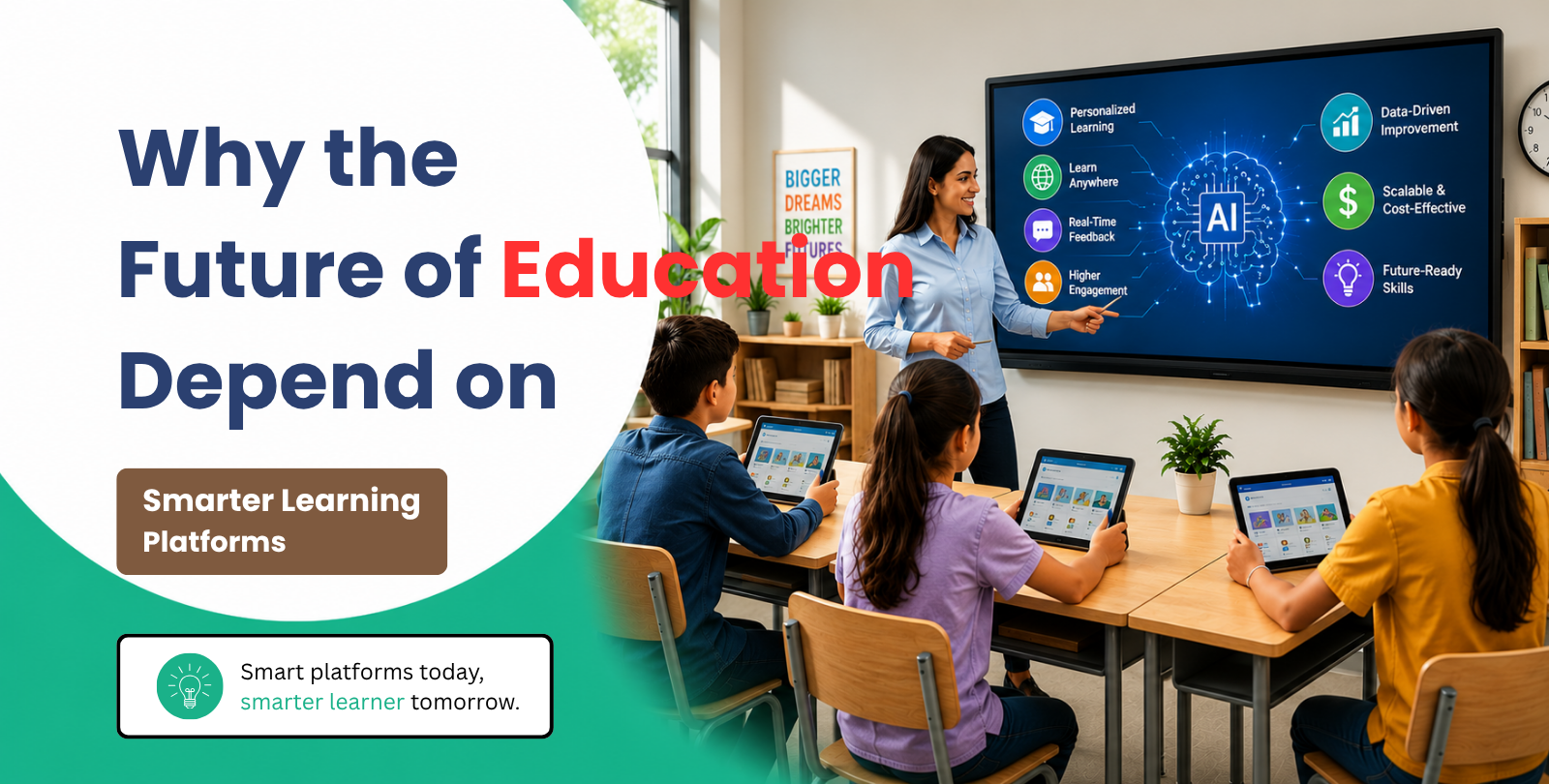
The future of education depends on smarter learning platforms because they make learning more personalized, accessible, engaging, and efficient. Traditional education often follows a one-size-fits-all approach, which may not meet the needs of every learner. Intelligent digital platforms use technologies such as artificial intelligence (AI), cloud computing, and learning analytics to adapt content, track progress, and provide better support for both students and teachers.1.Personalized LearningSmarter platforms analyze student performance and learning behavior to recommend lessons, quizzes, and resources that match individual needs. This allows students to learn at their own pace and focus on areas where they need improvement.2.Anytime, Anywhere AccessCloud-based learning platforms enable students to access courses from any device and location. This supports online, hybrid, and lifelong learning, making education more inclusive for remote learners, working professionals, and people with limited access to traditional classrooms.3.Real-Time FeedbackTeachers can monitor attendance, participation, assignments, and assessment results instantly. Identifying struggling students early makes it possible to provide timely support and improve overall learning outcomes.4. Higher EngagementInteractive videos, simulations, gamification, discussion forums, and mobile-friendly tools make learning more engaging than traditional lecture-based methods. These features increase student motivation, participation, and knowledge retention.5. Data-Driven ImprovementEducational institutions can use learning data to evaluate course effectiveness, improve teaching strategies, and refine curriculum design. This leads to continuous improvement in the quality of education.6. Scalable and Cost-EffectiveDigital courses can be delivered to thousands of learners with relatively low additional cost. As a result, smart learning platforms are valuable for schools, universities, training centers, government programs, and corporate learning initiatives.7. Preparing Learners for the FutureBeyond academic knowledge, these platforms help students develop digital literacy, self-directed learning, collaboration, communication, and problem-solving skills that are essential in a technology-driven economy.ConclusionSmarter learning platforms are becoming the foundation of modern education because they personalize learning, expand access and flexibility, provide real-time feedback, improve engagement, support data-driven decisions, reduce delivery costs, and prepare learners for the digital workforce.As education continues to evolve, intelligent learning platforms are doing more than supporting traditional teaching methods. They are helping build a more adaptive, inclusive, and future-ready learning ecosystem that can meet the changing needs of students, educators, and institutions in the digital age.

Aug 13, 2026
128
The Role of E-Learning in Bridging the Skills Gap Between Education and Employment E-Learning
The Role of E-Learning in Bridging the Skills Gap Between Educati...

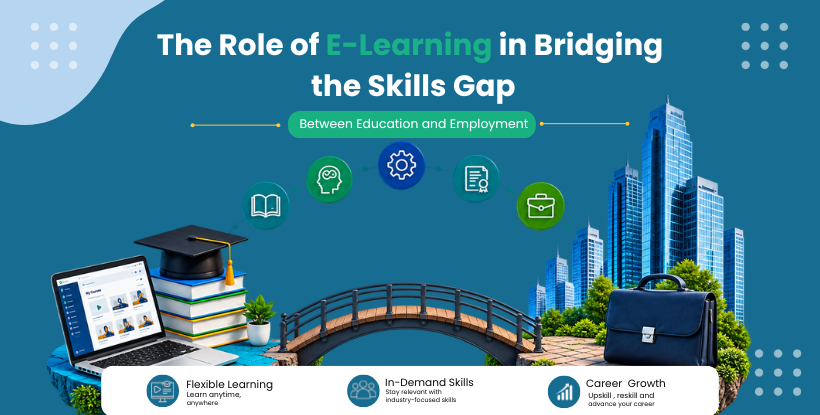
The Role of E-Learning in Bridging the Skills Gap Between Education and EmploymentE-learning helps close the gap between education and employment by giving learners flexible access to practical, relevant, and up-to-date skills. Traditional education provides foundational knowledge, while modern workplaces increasingly demand digital, technical, problem-solving, and communication skills. E-learning connects these areas through online courses, practical activities, assessments, certifications, and continuous professional development.As industries continue to adopt new technologies, the skills required for many jobs are changing. The World Economic Forum's Future of Jobs Report 2025 estimates that around 39% of workers' key skills may change by 2030 making continuous learning increasingly important.What Is the Skills Gap?The skills gap is the difference between the skills employers require and the skills learners or employees currently possess. A person may have strong academic knowledge but still need practical or technology-related skills to meet workplace expectations.The growth of AI, automation, cybersecurity, data technologies, and digital tools is creating demand for new technical skills, while employers also value creativity, communication, analytical thinking, adaptability, and collaboration.How E-Learning Helps Bridge the Gap1. Provides Job-Relevant SkillsE-learning offers targeted courses in areas such as programming, data analysis, digital tools, project management, communication, and emerging technologies.2. Supports Upskilling and ReskillingLearners can improve existing abilities or prepare for new careers without leaving their jobs or enrolling in full-time education.3. Combines Knowledge With PracticeProjects, assignments, quizzes, simulations, and case studies allow learners to apply knowledge to real-world situations.4. Offers Flexible LearningOnline learning allows students and professionals to study according to their own schedules and from different locations.5. Keeps Skills CurrentDigital courses can be updated as technologies, tools, and industry requirements change, helping learners maintain relevant skills.6. Supports Career-Focused LearningE-learning can provide training based on specific job roles and professional requirements, creating a stronger connection between learning and employment.7. Tracks Learning ProgressE-learning platforms can monitor course completion, assessments, assignments, and progress. Certificates and digital credentials can also demonstrate completed training.From Education to EmployabilityThe goal is not simply to provide more courses but to connect education with practical skills and career outcomes.Education → Skill Development → Practical Application → Assessment → Certification → Employment → Continuous LearningE-learning can support this journey by combining structured courses, practical activities, assessments, progress tracking, and certification.Why Continuous Learning Matters?Education no longer needs to end with graduation. As technology and job roles evolve, professionals need to continuously update their knowledge and skills. Upskilling and reskilling allow individuals to remain competitive and prepare for new career opportunities.E-learning makes this process more accessible by allowing people to learn while continuing their education, work, or other responsibilities.The Future of E-Learning and Employability?As workplaces become more digital, e-learning will play an increasingly important role in career development, professional training, and employability. Combining technical knowledge with skills such as creativity, critical thinking, communication, and adaptability can help learners prepare for changing workplace demands.ConclusionThe growing skills gap between education and employment creates challenges for learners, educators, and employers. E-learning can help address this gap by connecting academic knowledge with practical skills, upskilling, reskilling, assessment, certification, and career development.By providing flexible and relevant learning opportunities, e-learning helps learners move from knowledge to skills and from skills to employment, while preparing them for the changing demands of the future workplace.

Aug 12, 2026
82
Learning Without Borders: Creating Inclusive and Connected Global Education ? Global LMS
Learning Without Borders: Creating Inclusive and Connected Global...

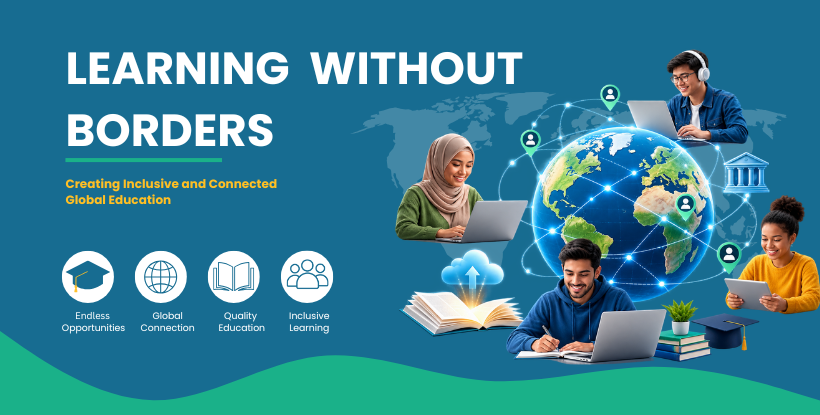
Learning Without Borders: Creating Inclusive and Connected Global Education ?Learning Without Borders is a modern approach to education that uses technologies like LMS, AI, cloud computing, and virtual classrooms to make learning accessible beyond geographical boundaries. It allows learners and educators from different countries, cultures, and backgrounds to connect, learn, and share knowledge.What Does It Mean?Traditional education is often limited by location, fixed schedules, and access to local resources. Digital learning reduces these limitations by allowing learners to:* Access courses from anywhere* Learn at flexible times* Attend virtual classes* Access digital resources* Connect with instructors and learners globally* Track progress and earn digital certificatesWhy Is Inclusive Education Important?Global education should be accessible to learners with different languages, cultures, abilities, financial situations, and levels of technology access. Features such as multilingual content, captions, mobile-friendly platforms, and flexible schedules can make learning more inclusive.Role of TechnologyLMS: Manages courses, learners, assessments, resources, and progress in one platform.AI: Supports personalized learning and recommends relevant content.Virtual Classrooms: Connect teachers and learners in real time from different locations.Cloud Technology: Makes learning platforms and resources accessible across devices and locations.ChallengesCreating borderless education still requires addressing the digital divide, language barriers, accessibility, cultural differences, and digital literacy. Technology alone is not enough; institutions also need inclusive and affordable learning strategies.Future of Global LearningThe future of education is becoming more flexible, connected, personalized, and technology-driven. AI, mobile learning, virtual classrooms, and digital credentials can further connect learners around the world.ConclusionLearning Without Borders aims to create an education system where geographical location does not limit learning opportunities. With the right combination of technology, accessibility, flexibility, and inclusive design LMS platforms can help build a truly connected global learning environment.

Aug 11, 2026
107
Beyond Enrollment: How an LMS Creates a Seamless Learning Journey from Admission to Certification Global LMS
Beyond Enrollment: How an LMS Creates a Seamless Learning Journey...

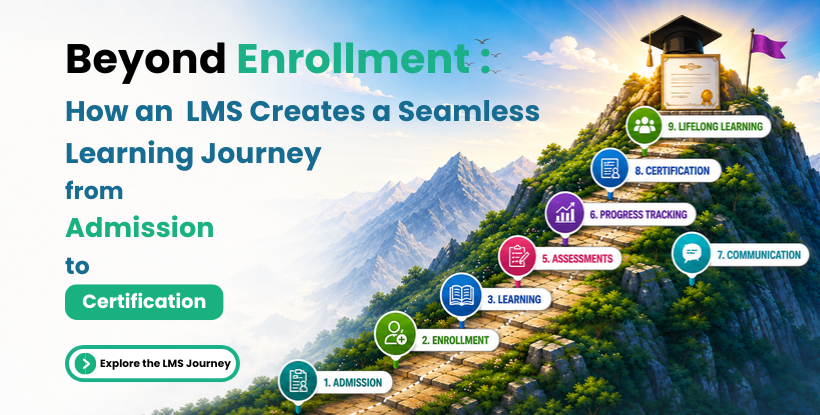
A student's learning journey begins before the first class and continues even after course completion. Managing every stage manually can be time-consuming and prone to errors.A modern Learning Management System brings admissions, learning, assessments, communication, and certification together in one place, making education more organized, efficient, and learner-focused.What Is the Student Journey?The student journey covers every step of a learner's experience, including:* Online admission* Course enrollment* Learning activities* Attendance* Assignments* Online exams* Progress tracking* Certificates* Alumni engagementManaging these stages in one system creates a smoother experience for both students and educators.Why Use One LMS for Everything?Using a single LMS helps institutions:* Save administrative time* Reduce paperwork* Improve student engagement* Track learner progress* Generate instant reports* Deliver a better learning experienceA centralized platform keeps all student information secure and easy to manage. Step 1: Online AdmissionsAn LMS digitizes the admission process with online forms, document uploads, and automated approvals. This reduces paperwork and speeds up student onboarding.Step 2: Course EnrollmentStudents can enroll in courses quickly through self-registration or administrator approval. Once enrolled, they can access learning materials immediately.Step 3: Learning & Course DeliveryAn LMS supports video lessons, live classes, quizzes, downloadable resources, and self-paced learning, allowing students to learn anytime and anywhere.Step 4: Attendance ManagementAttendance is recorded automatically through online sessions or live classes, helping institutions maintain accurate records with less manual work.Step 5: Assignments & AssessmentsEducators can create assignments, quizzes, and online exams while providing faster grading and instant feedback to students.Step 6: Progress TrackingReal-time dashboards and learning analytics help institutions monitor student performance, identify learning gaps, and support academic success.Step 7: Student CommunicationAnnouncements, notifications, reminders, and discussion forums keep students informed and encourage active participation throughout the course.Step 8: Digital CertificationAfter completing a course, students receive secure digital certificates that can be downloaded, verified, and shared instantly.Step 9: Lifelong LearningAn LMS continues supporting learners by offering advanced courses, professional training, and alumni engagement opportunities even after certification.ConclusionManaging the complete student lifecycle becomes much easier with a modern Learning Management System. By combining admissions, learning, assessments, attendance, communication, reporting, and certification into one platform, institutions can improve efficiency while delivering a better learning experience.As digital education continues to grow, adopting an all-in-one LMS is a smart investment for schools, colleges, universities, coaching centers, and training institutes looking to provide quality education and simplify academic management.

Aug 07, 2026
100
Why Educational Institutions Need an LMS to Stay Competitive ? Global LMS
Why Educational Institutions Need an LMS to Stay Competitive ?

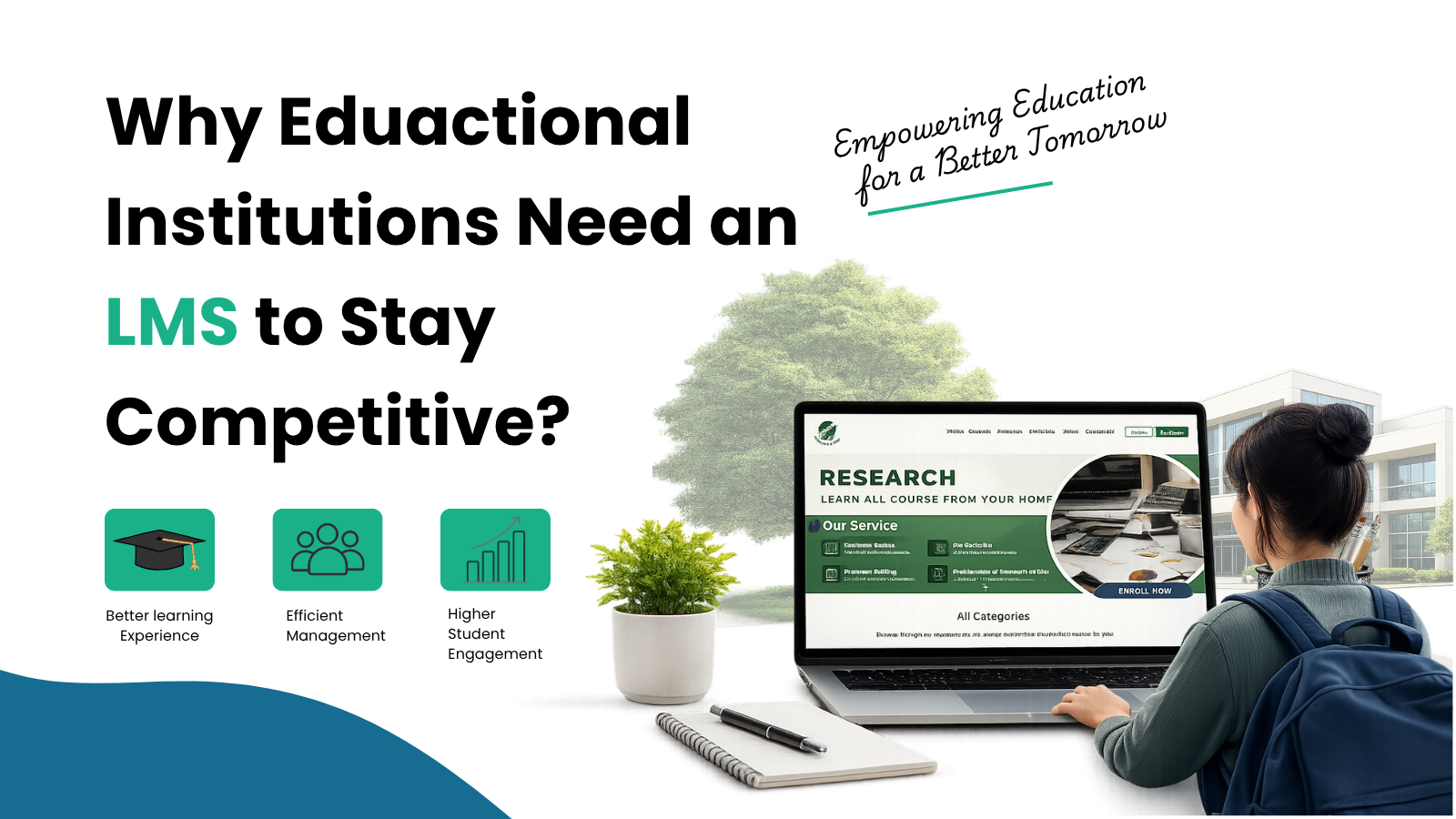
Why Educational Institutions Need an LMS to Stay Competitive ?Education is rapidly evolving as technology transforms the way students learn and institutions operate. Today's learners expect flexible, interactive, and personalized learning experiences that go beyond traditional classrooms. To meet these expectations and remain competitive, schools, colleges, universities, coaching centers, and training institutes are increasingly adopting **Learning Management Systems (LMS).**An LMS is a centralized platform that helps institutions deliver online and blended learning, manage courses, track student progress, conduct assessments, and improve communication—all from a single system. Beyond simplifying administration, it enhances the overall learning experience for both educators and students.Why Educational Institutions Need an LMS? Flexible LearningStudents can access courses, assignments, recorded lectures, and learning resources anytime, anywhere using any device, making education more accessible and convenient.Better Student EngagementInteractive features such as live classes, quizzes, discussion forums, multimedia content, and gamification create an engaging learning environment that keeps students motivated.Efficient Course ManagementAn LMS centralizes course materials, assignments, attendance, assessments, and academic records, helping educators save time while improving organization and consistency.Smarter AssessmentsInstitutions can conduct online quizzes, exams, and assignments with automated grading and instant feedback, making evaluation faster and more accurate.Learning AnalyticsReal-time reports allow educators to monitor attendance, course completion, student performance, and engagement, enabling data-driven academic decisions.Improved CommunicationBuilt-in messaging, announcements, notifications, and discussion boards keep students, teachers, and administrators connected throughout the learning process.Scalability and Future ReadinessWhether serving hundreds or thousands of learners, an LMS easily supports institutional growth while integrating modern technologies such as AI, mobile learning, and virtual classrooms.Benefits of an LMS* Flexible and hybrid learning* Higher student engagement* Streamlined administration* Faster assessments and feedback* Data-driven decision making* Better communication and collaboration* Reduced operational costs* Personalized learning experiences* Increased student satisfaction* Scalable digital educationConclusionA Learning Management System is more than just an online learning platform it is a strategic investment in the future of education. By improving teaching efficiency, enhancing student engagement, and simplifying academic management, an LMS helps educational institutions deliver high-quality learning experiences while staying competitive in today's digital world. Institutions that embrace modern LMS technology are better positioned to attract more students, improve learning outcomes, and prepare learners for future success.

Aug 05, 2026
129
Global Learning Ecosystems: The Next Evolution of Digital Education Global LMS
Global Learning Ecosystems: The Next Evolution of Digital Educati...

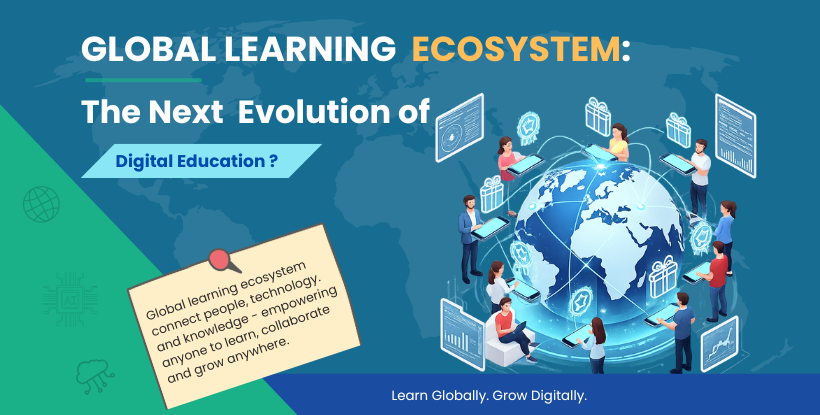
A Global Learning Ecosystem is a digitally connected learning network that brings together students, educators, institutions, and organizations through advanced technologies. By integrating **Learning Management Systems (LMS), artificial intelligence (AI), virtual classrooms, cloud computing, mobile learning, and collaboration tools**, it enables flexible, personalized, and accessible education. These ecosystems eliminate geographical barriers, encourage global collaboration, and support continuous learning for people around the world.Global Learning Ecosystems: The Next Evolution of Digital EducationDigital innovation has completely reshaped the way education is delivered. Learning is no longer limited to physical classrooms or specific locations. Today, individuals can access online courses, attend virtual classes, collaborate with peers across countries, and earn certifications from virtually anywhere.A Global Learning Ecosystem makes this possible by connecting learners, educators, institutions, and digital technologies into one unified environment. It provides an efficient and scalable approach to education, helping schools, universities, training institutes, and businesses deliver high-quality learning experiences to a global audience.What Is a Global Learning Ecosystem?A Global Learning Ecosystem is a unified digital learning environment that combines educational technologies, communication platforms, learning resources, and data-driven tools into a single system. It allows learners to access educational content anytime and from any location while promoting collaboration between educators, institutions, and learners.A typical global learning ecosystem may include:* Learning Management Systems (LMS)* Virtual classrooms* Mobile learning platforms* Video conferencing tools* Online assessments* Digital certificates* Learning analytics* AI-powered learning features* Collaboration and communication tools* Cloud-based educational resourcesTogether, these technologies create a connected learning environment that supports effective and continuous education.Why Are Global Learning Ecosystems Important?Today's learners expect education that is convenient, engaging, and personalized. At the same time, educational institutions and organizations require scalable solutions to deliver consistent learning experiences across different regions.Global learning ecosystems help meet these expectations by:* Eliminating location-based learning barriers* Supporting online, hybrid, and self-paced learning* Making quality education more accessible* Encouraging lifelong learning and professional development* Connecting learners and educators worldwideAs digital education continues to expand, global learning ecosystems have become a key part of modern teaching and training.Core Components of a Global Learning Ecosystem1. Learning Management System (LMS)The LMS acts as the central platform for managing courses, learners, assessments, certifications, and progress tracking. It simplifies administration while creating an organized and engaging learning experience. 2. Virtual ClassroomsVirtual classrooms allow instructors and learners to interact in real time through video sessions, discussions, and collaborative activities. This makes learning possible regardless of geographical location. 3. Mobile LearningMobile learning enables learners to access courses, assignments, and educational resources using smartphones or tablets. It offers greater flexibility and allows learning to continue anytime, anywhere.4. Artificial Intelligence (AI)AI improves digital learning by personalizing educational content, recommending learning paths, automating assessments, and providing insights that help educators support learner success.5. Learning AnalyticsLearning analytics collects and analyzes learner data, including participation, progress, and assessment performance. These insights help educators make informed decisions and improve educational outcomes.6. Collaboration ToolsFeatures such as discussion forums, messaging, shared workspaces, and group projects encourage communication, teamwork, and knowledge sharing among learners from different backgrounds.Benefits of Global Learning EcosystemsBetter Access to EducationLearners can participate in high-quality educational programs from almost anywhere in the world without the need to travel or relocate.Consistent Learning ExperiencesEducational institutions and organizations can deliver the same training and learning materials across multiple locations, ensuring consistency in education.Personalized LearningAI-powered technologies adapt learning experiences based on each learner's progress, strengths, and learning preferences, helping improve overall performance.Higher Learner EngagementInteractive videos, quizzes, live sessions, gamification, and collaborative activities make learning more engaging and enjoyable.Cost-Effective TrainingDigital learning reduces expenses related to travel, printed materials, classroom facilities, and instructor scheduling while allowing organizations to reach larger audiences.Improved Global CollaborationLearners and educators from different countries can connect, exchange ideas, and collaborate, helping develop communication skills and global perspectives.Challenges of Building a Global Learning EcosystemDespite its advantages, implementing a global learning ecosystem comes with challenges. Common issues include unreliable internet access, language barriers, time zone differences, data security concerns, varying digital skills, learner engagement, and technology integration.These challenges can be minimized by selecting the right LMS, providing adequate training, and adopting effective digital learning strategies.The Role of Learning Management Systems in Global LearningA Learning Management System is the core technology that supports a global learning ecosystem. It brings together courses, learners, assessments, communication, reporting, and analytics into one centralized platform.Features such as mobile access, multilingual support, virtual classroom integration, automated reporting, and AI-powered recommendations enable institutions to deliver efficient, scalable, and engaging learning experiences across the world.Future Trends in Global Learning EcosystemsThe future of global learning will continue to be driven by emerging technologies. AI-powered tutors, adaptive learning, Virtual Reality (VR), Augmented Reality (AR), blockchain-based digital credentials, microlearning, predictive analytics, and inclusive learning design are expected to play an increasingly important role.These innovations will make education more intelligent, personalized, interactive, and accessible for learners everywhere.ConclusionGlobal Learning Ecosystems are changing the way education is delivered by connecting learners, educators, and institutions through modern digital technologies. By integrating LMS platforms, artificial intelligence, cloud computing, mobile learning, analytics, and collaboration tools, organizations can provide engaging, flexible, and scalable learning experiences to people across the globe.As online education continues to grow, investing in a global learning ecosystem is becoming increasingly important. Institutions that embrace this approach will be better prepared to expand their reach, improve learner outcomes, and equip individuals with the knowledge and skills needed to succeed in an increasingly connected world.
Aug 04, 2026
122
Learning Experience vs Learning Management: Why Both Matter in Modern E-Learning? E-Learning
Learning Experience vs Learning Management: Why Both Matter in Mo...

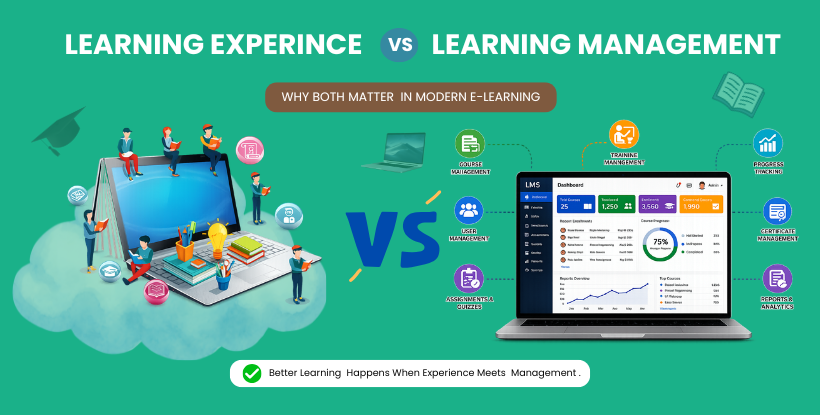
Learning Experience vs Learning Management: Why Both Matter in Modern E-Learning?Successful online learning depends on more than simply delivering courses it requires both an engaging learner experience and effective course management. **Learning Experience (LX) focuses on how learners interact with content, instructors, and digital tools throughout their learning journey. It aims to make education interactive, personalized, and enjoyable. Learning Management (LM) , in contrast, focuses on organizing, delivering, monitoring, and evaluating learning programs through a Learning Management System (LMS)Although these concepts have different objectives, they complement one another. Learning Management provides the structure and administration needed to run training programs efficiently, while Learning Experience ensures learners remain motivated, engaged, and able to achieve better learning outcomes.What Is Learning Experience (LX)?Learning Experience (LX) refers to the quality of a learner's journey from the moment they enroll in a course until they complete it. It emphasizes how learners feel, interact, and progress throughout the learning process rather than simply focusing on delivering educational materials.A positive learning experience is often supported by features such as:* Clear and user-friendly course navigation* Interactive videos, quizzes, and simulations* Customized learning paths based on individual needs* Immediate feedback after assessments* Group discussions and collaborative learning* Learning from any device, including smartphones and tablets* Gamification elements like points, badges, and achievement levelsThe purpose of Learning Experience is to create an environment where learners stay engaged, participate actively, and retain knowledge more effectively.What Is Learning Management?Learning Management is the process of planning, administering, and monitoring educational or training activities. It enables instructors and administrators to manage every stage of the learning process while ensuring courses are delivered consistently and efficiently.Typical Learning Management responsibilities include:* Developing and organizing course content* Registering and managing learners* Scheduling lessons and assignments* Tracking attendance and learning progress* Conducting online tests and examinations* Issuing certificates after course completion* Producing reports and performance insightThese activities are generally handled through a Learning Management System (LMS), which automates administrative tasks and improves overall training efficiency.Why Are Both Essential?Many organizations invest in an LMS expecting it to solve every learning challenge. However, managing courses effectively is only one part of successful online education. Learners also need an engaging and meaningful learning experience.Without a strong Learning Experience:* Learners can quickly lose interest.* Course completion rates may decline.* Information is less likely to be retained.* Overall satisfaction decreases.Without proper Learning Management:* Course administration becomes difficult.* Tracking learner progress becomes inconsistent.* Reporting and certification require more manual effort.* Administrative teams spend more time on routine tasksCombining both Learning Experience and Learning Management creates a learning environment that is efficient for administrators and rewarding for learners.How Modern LMS Platforms Bring Both Together?Modern LMS platforms are designed to support both administrative management and learner engagement. They combine operational tools with interactive learning features to create a complete digital learning ecosystem.Common LMS capabilities include:* Personalized dashboards* AI-driven learning recommendations* Interactive quizzes and assignments* Gamification tools* Discussion forums and peer collaboration* Mobile learning accessibility* Learning analytics and performance tracking* Automated alerts, reminders, and notificationsTogether, these features improve learning quality while reducing administrative workload.Advantages for Educational Institutions and BusinessesOrganizations that balance Learning Experience with Learning Management can achieve several benefits, including:* Higher learner engagement* Better course completion rates* Reduced administrative workload* More personalized learning experiences* Accurate tracking of learner performance* Improved knowledge retention* Data-driven decision-making through analytics* Easier expansion of training programsBest Practices for Combining LX and LMTo achieve the best results, organizations should:1. Design courses with learners' goals and preferences in mind.2. Break lessons into short, engaging modules.3. Use interactive assessments with instant feedback.4. Regularly monitor learner performance.5. Offer flexible and personalized learning paths.6. Ensure all learning materials are mobile-friendly.7. Analyze learning data to improve future courses.8. Collect learner feedback and continuously enhance the learning experience.ConclusionLearning Experience and Learning Management are two equally important elements of successful digital education. Learning Management ensures courses are organized, delivered, and monitored efficiently, while Learning Experience focuses on creating engaging, personalized, and meaningful learning journeys.Organizations that integrate both approaches through a modern LMS can improve learner satisfaction, increase completion rates, simplify administration, and deliver more effective online education. Rather than choosing one over the other, the greatest value comes from using Learning Experience and Learning Management together to create a complete and successful e-learning environment.

Aug 03, 2026
106